

When Your Brain Becomes the One Thing You Can't Outwork
How Chronic Exhaustion Turned My Life Into Survival Mode – And What It Takes to Slowly Come Back

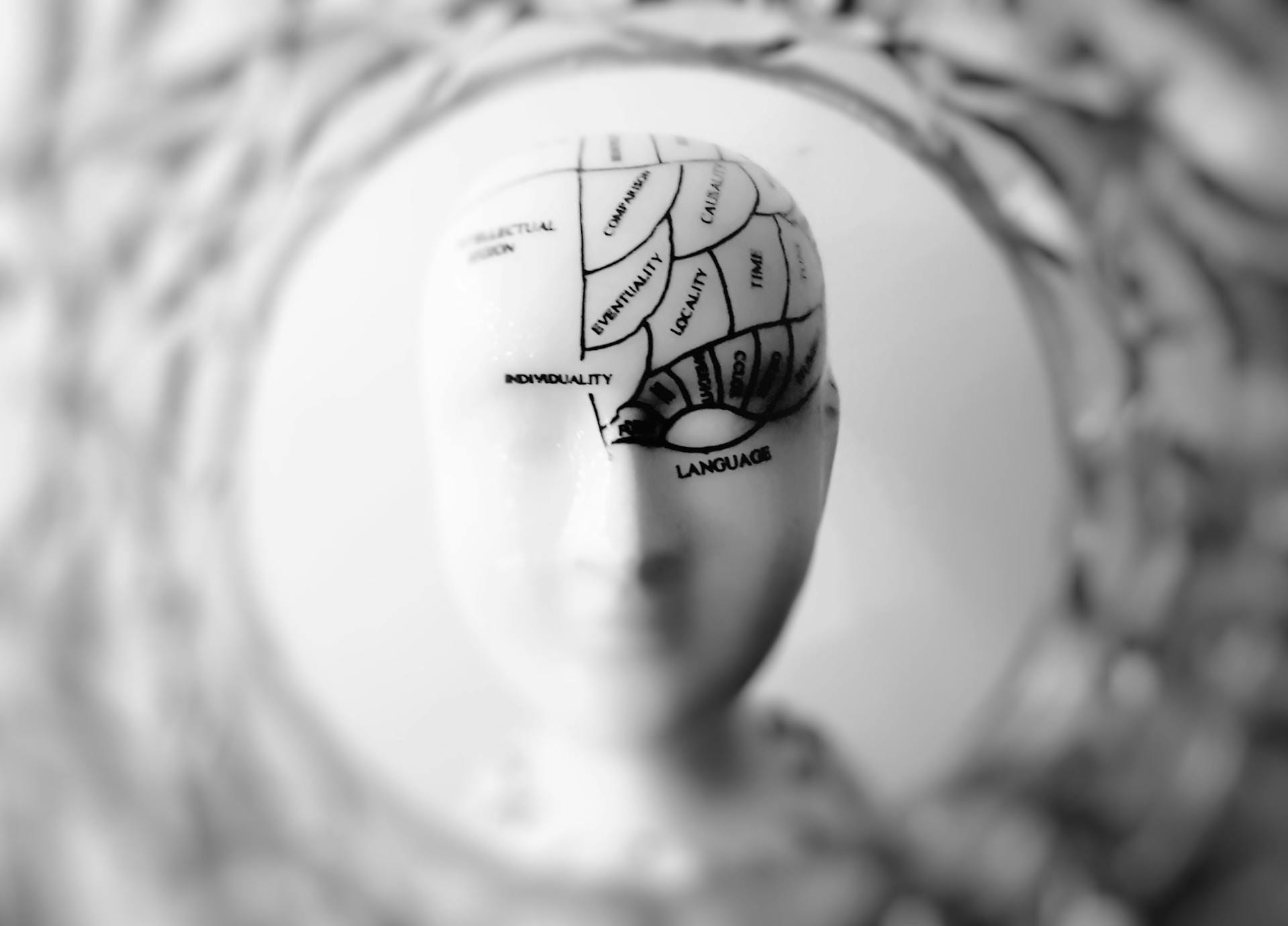
In 2009, my head tried to warn me before anyone else did.
Not with a polite little tension headache, but with a violent, pulsing pain that felt like someone had plugged my skull straight into a high-voltage line and walked away. I had never felt anything like it before. It came out of nowhere, knocked me out of my own life for a while, and then left without an explanation.
What happened? I still do not know.
Why did it happen? The doctors never found an answer. They scanned, tested, shrugged, and sent me back out into the world with the same pounding head and a vague label: probably migraine. So I did what I had always done. I went back to work. I pushed on. I told myself this was just something I had to live with.
A couple of years later, the headaches started coming more often. They grew stronger, lasted longer, and quietly began to rearrange my life. At first, I told myself stories:
“I am just tired.”
“It is just stress.”
“It is just one of those weeks.”
But weeks became months, and months became years. I still thought it was “just migraine”. There were not many effective treatments available at the time, so the routine was simple: swallow some painkillers, find a dark room, wait it out, and then drag myself back into the game.
I almost ended up in a research group once. I did not get in.
Sometimes I wonder if that could have been the moment someone finally said, “This is not migraine at all. This is something else.” But that moment never came. Not then.
So I did what I had been trained to do by life, work, and the culture around me: I minimized it. I normalized it. I kept going.
Becoming the Machine
My adult working life started in the oil industry, in a world where working 12–16-hour shifts for 14 days straight was just what you did. You worked hard, you went offshore, you pushed through, and then you had 3–4 weeks off depending on the rotation you landed in. On paper it looked like a brutal sprint followed by generous rest. In reality, it turned me into someone who believed that my body was an engine and my willpower was infinite.
People like to romanticize that kind of schedule.
They hear “14 days on, 3–4 weeks off” and imagine endless holidays, travel, hobbies, freedom. What they do not see is the way your nervous system learns to live in extremes: on or off, full speed or full stop, floodlights or darkness. There is very little space for a normal middle ground. You teach your brain that rest is not something you integrate into your daily life; it is a faraway island you swim to half-drowned and then sleep through.
At the same time, life outside of work was not exactly a soft landing.
Family challenges, relationship turbulence, and emotional battles that never made it into any medical journal were quietly shaping the background noise of my everyday existence. None of it felt like “the big thing” that could break me, but all of it added weight to the bar I was lifting without ever putting it down. It is easy to underestimate how much these things matter when you are determined to be unstoppable. You just tell yourself you are built for this. You swallow whatever hurts and call it “part of life”.
I moved through my twenties and early thirties like that:
Always with something to prove.
Always with more responsibility on my plate.
Always with the same underlying belief: if I just work harder, I will get where I want to be, and then it will all make sense.
I did not realize that I was training myself to ignore every signal my body sent me.
When “Normal Office Life” Is Anything but Normal
In 2013, I moved from offshore to working on land.
In theory, this was supposed to be the moment life became “normal”: 8–16, Monday to Friday, evenings and weekends off, a rhythm that supposedly gives you time to breathe. I thought this would be the balance everyone talks about.
That was not how it went.
As the department grew and the number of projects increased, my hours quietly stretched. Eight hours became ten, ten became twelve, some weeks blurred into something that looked more like 70–90 hours than a civilized workweek. On paper, my job title changed. In reality, the machine simply changed location.
My income went up.
So did my expenses.
It is funny how that works. The more I worked, the more I earned, and the more I justified a lifestyle that required me to keep that pace. I told myself I was doing well: I was healthy, I was young, I was productive, and most importantly, I was valuable. Being the person who was always available, always stepping up, always saying yes, became part of my identity.
For a while, my body played along. I trained, I stayed in decent shape, I convinced myself I was handling it. Then I injured myself trying to lift more than I should. It knocked me out of proper training for months. I replaced heavy sessions with short walks and trips with the dog. Then even that started to feel like a chore. Something small and quiet inside me started asking:
“What is happening? Why is this getting harder?”
I ignored it.
I blamed everything on the headaches.
If I was too tired to do anything after work, it was the migraine’s fault.
If I skipped training, it was the migraine’s fault.
If I could not be social, if I cancelled plans, if weekends disappeared into darkness and silence, it was always the migraine.
Work, on the other hand, was non-negotiable. Work was the one thing I kept showing up for, no matter how I felt. Work was where I could still perform, still be “me”, still be the reliable one. Everything else shrank around it.
A Life Built Around Work and Headaches
Looking back now, it is almost painful to see how small my life had become without me noticing. My days followed the same pattern:
Wake up.
Go to work.
Give everything.
Come home.
Collapse on the sofa.
Sleep in the afternoon to be able to function at all in the evening.
Wait for the next workday to start.
I always looked forward to the next vacation, the next long weekend, the end of the current project. That was when I would finally rest, finally breathe, finally “fix” things. But when those breaks came, I never really rested. I was too tired to live and too wired to relax. So I lay there, waiting for my head to calm down, scrolling, distracting myself, counting the days until I had to perform again.
My body kept sending warnings, and I kept explaining them away.
When my sleep began to fall apart, I finally went to the doctor.
He could not find anything “wrong” with me in the conventional sense. Blood tests looked fine. Standard questions had standard answers. I was functioning. I was working. On paper, I was okay. He gave me sleeping pills. They left me feeling more exhausted in the morning than I was without them. I stopped taking them. Somehow, my sleep eventually stabilized just enough for me to keep going.
We talked about the headaches again.
More pills.
A referral to the hospital.
A new round of tests and experiments, this time more specialized, more clinical, but with the same underlying assumption: “migraine”.
At the hospital, I tried medication after medication.
In total, I went through 17 different migraine treatments. None of them worked. Not in any meaningful, reliable way. Each time something failed, I felt a little more broken. Not just sick, but wrong. As if my body refused to respond the way it was supposed to.
At some point, someone suggested Botox.
My first reaction was: “Isn’t that what people use to smooth out their foreheads?”
Yes. Also, apparently, it can be used for chronic migraine. So I tried that too. I ended up with a smoother forehead and, every now and then, a period with less pain. It felt like progress, but in hindsight, it might have been coincidence as much as anything else. I still go for Botox every four months, but at this point I am not even sure if it does anything for the headaches. The pain kept returning. The fatigue kept getting worse.
The one thing that never changed was my relationship to work: I kept showing up. I could be at 100% on the job and at 0% everywhere else. That became my normal.
2023: The Project That Broke the Illusion
By 2023, this way of living had been going on for years.
I had climbed in responsibility, in income, in expectations. I had become the person you called when a demanding project needed a safe pair of hands. I liked that role. It confirmed everything I believed about myself: that I was strong, reliable, productive, and unbreakable.
Then came the big project I had been looking forward to for a long time.
It was structured in four batches. I knew it would be intense, but intensity was my specialty. The first batch started and finished according to plan. I was at work 32 days in a row without a single day off. The money was incredible. On paper, this was a dream scenario: long stretch, great pay, clear results.
But when the money hit my account, I felt absolutely nothing.
No excitement.
No pride.
No smile.
Nothing.
That should have been a clear signal that something was deeply wrong. When the reward system in your brain does not even blink at what used to motivate you, something fundamental has shifted. Chronic stress can literally blunt the way the brain processes reward and emotion, making joy harder to access and numbness more familiar.
I noted the emptiness, but I did not act on it.
Instead, I geared up for batch two.
I went into it like I always had: as the unstoppable machine. Give me long days, give me complex logistics, give me pressure. That was where I knew how to function. That was where I felt at home. Or at least, that was what I told myself.
One day, during batch two, I grabbed my lunch and ate it at the office.
That is the last clear memory I have from that late morning.
What happened between 11:00 and 14:00 is still a black hole.
I do not remember what I did.
I do not remember what I said.
I do not remember how I moved, who I talked to, what I touched.
At some point that afternoon, a doctor told me I had collapsed.
I had hit the wall.
I was burned out.
The First Crash: When “Just Push Through” Stops Working
Hearing the word “burnout” attached to your own name is strange when your entire identity is built around coping with more than you should. For years, I had worn my capacity like armor. Long hours, heavy responsibility, difficult situations – I could take it. I always had.
Now, I was signed off sick.
For around a month, I did basically nothing. Not “Netflix and recovery, green smoothies and yoga” nothing. More like staring-into-space nothing. Existing. Waiting. Trying to follow the generic advice I kept being given:
Eat healthy.
Get some exercise.
Go for walks.
Do things that make you happy.
Rest.
It will get better.
These are not bad suggestions on their own. They just barely touch the reality of a brain and body that have been running in emergency mode for years. When you are beyond exhausted, “do something that makes you happy” can feel like a cruel joke. Sometimes, you do not even have access to happiness. You have fog, static, and the sense that the world is happening a few meters away from you.
I tried to follow instructions.
I tried to trust that time off would fix it.
But the truth is: it never really got better. Not in the way I needed it to.
So I did what I knew how to do.
I went back to work.
The Second Crash: After the “Perfect” Holiday
I started slowly.
Reduced load, softer re-entry, the kind of compromise plan that looks good in a meeting room or in a doctor’s note. Then, gradually, I ramped back up.
Batch three of the project was coming. Originally, I was supposed to miss it because it landed right in the middle of my vacation. In my head, this looked like a perfect reset: four weeks of rest, then back to normal operations. Life, of course, had other plans.
The project was delayed.
My vacation stayed where it was.
For four weeks, I felt, almost normal. I enjoyed myself. I relaxed. I laughed. I told myself I had finally managed to recharge properly. The story in my head was simple: “This is what I needed. Now I am ready.”
I came back from that holiday and started on batch three.
The first week went fine. I performed. I was present. I told myself the worst was behind me.
At the beginning of week two, I crashed again.
Another collapse.
Another round of doctors, psychologists, and the same old advice delivered with the same calm voices:
Eat well.
Move your body.
Rest.
Reduce stress.
Do pleasant activities.
Something in me started to get angry. Not at the people trying to help, but at the feeling that no one was naming what was actually happening to me. I was not just “a bit stressed”. I was falling apart. I was forgetting things said in meetings the same day. I was sitting in afternoon meetings where everything turned into noise and fog after 14:00. At home, I was forgetting conversations. I was constantly tired, constantly drained, and all I wanted to do was sleep.
At one point, I switched departments at work.
The idea was that a new environment would help, that maybe the old one had made me sick. I tried to adapt. New faces, new routines, new expectations. My employer was understanding and accommodating, something I am genuinely grateful for. I got new tasks that suited me better. On the surface, things were improving.
Inside, I was getting worse.
My performance dropped. My mental clarity collapsed in the afternoons. Meetings after a certain time might as well have been held in another language. I was there physically, but my brain was running on fumes. It was like trying to listen to the radio with the volume turned down and three channels overlapping.
We tried 50% sick leave. It almost made things more chaotic. Half in, half out. Half functioning, half not. Eventually, I ended up on 100% sick leave again. I was desperate to understand what was wrong with me. Not just a label, not just “burnout”, but an explanation that matched what I felt in my body and mind.
The Book That Finally Said “Brain”
In that desperation, I did what people do now: I searched.
Online, locally, anywhere I could think of. That is how I found a psychologist in my area who had written a book called “Utmattelse” – Exhaustion.
I bought the book.
I started reading.
Page after page, it felt like someone had broken into my head and taken notes for years. The descriptions of symptoms, patterns, thought loops, physical reactions – it was as if my life had been mapped out and printed. The only part that did not feel like me yet was the section about how to get out of it.
For years, doctors and psychologists had told me:
“You are exhausted.”
“You are tired.”
“You are stressed.”
They were not wrong. They just left out a crucial word.
No one had talked about the brain.
No one had explained that chronic stress and overload do not just make you “tired”; they physically and functionally change the brain. Areas involved in emotional regulation, memory, and executive functioning can shrink or lose efficiency under prolonged stress, while regions like the amygdala, which handles threat and fear, can become overactive. This can lead to constant hyperarousal, difficulties concentrating, memory problems, and a feeling of being permanently “on edge” or “wired and tired”.
The book did not just say “you are tired”; it said,
“Your brain is overloaded. It is doing this on purpose. It is trying to make you stop.”
Suddenly, my headaches made a different kind of sense.
The pain in my head. The muscular pain in my back and thighs. The waves of nausea and feeling unwell that came and went without clear physical cause. All of it could be seen as the brain pulling emergency brakes with whatever tools it had. It was not that my body was betraying me. It was that my brain had been sending signals for years, and I had never truly listened.
Reading that, something clicked.
I was not just burned out.
I was chronically exhausted. My brain and nervous system had been in survival mode so long that they had started shutting down what they could to protect what was left.
In one week with that book, I learned more about myself than I had in the previous ten years.
The Hardest Lesson: Doing Nothing Is Not Scrolling
Understanding what was happening in my brain did not magically fix it. But it gave me a new kind of map. It told me that the way back was not through more effort, more optimization, more “fixing”. It was, in many ways, the opposite.
One of the most confronting ideas was this:
The solution, at least for a while, was to do nothing.
Not “scroll your way through a day in bed” nothing.
Not “lie on the sofa while your brain is still in overdrive on your phone” nothing.
Scrolling TikTok or social media is not rest for an overloaded brain. It is more input. More noise. More stimulation. It keeps the system activated. It asks your already exhausted brain to process hundreds of micro-impressions, emotions, and pieces of information in minutes. It feels passive, but neurologically, it is not.
I had to re-learn how to be bored.
That might sound trivial, but it has been one of the hardest things I have ever done. To sit without a screen. To walk without a podcast. To drink coffee without also scanning emails. To lie on a sofa and actually let my thoughts slow down instead of numbing them with constant content.
The psychologist who wrote the book, Rune Karlson, has been through this himself. That matters more than any degree to me in this context. There is a depth to advice that comes from someone who has lived the collapse, not just studied it. Some of his methods felt strange at first – like deliberately disconnecting, travelling away, giving yourself “permission” to not be useful for a while – but some of those odd-seeming steps have actually worked for me.
Disconnect.
Leave.
Start repair.
That is where I am now: somewhere between collapse and repair. Somewhere between my old identity as the unstoppable worker and a new, fragile identity that does not yet have a clear name.
Learning to Live Inside a Smaller Day
One of the strangest parts of this whole journey has been realizing how small a day can become when you stop measuring it in output.
Before, a “good” day meant many things done: tasks completed, emails answered, hours billed, problems solved. Now, a “good” day can be something as simple – and as difficult – as:
Getting up at a reasonable time.
Eating two actual meals.
Going for a short walk without crashing afterwards.
Remembering what someone told me in the morning by the time evening comes.
Chronic exhaustion does not just mean “feeling tired”; it reshapes what you are able to hold in a single day without breaking. People with chronic fatigue and burnout often describe needing to pace themselves carefully, saving limited energy for essential tasks and planning rest like appointments. That is where I have ended up too, whether I wanted to or not.
There are days when showering and answering one email uses up more than half of what I have. There are days when a thirty‑minute conversation feels like a marathon. There are days when I cancel something I actually wanted to do because my body has already decided the limit has been reached.
Old me would have called this laziness.
Now, I call it survival.
The Science I Wish Someone Had Told Me Earlier
Understanding the brain side of this has been strangely comforting. Not because it makes everything okay, but because it makes it real.
Research on burnout and chronic stress shows that long‑term overload can change both the structure and function of the brain, especially in areas like the prefrontal cortex (planning, decision‑making, impulse control) and the hippocampus (memory), while the amygdala (threat detection) can become overactive. This can mean:
Memory problems and “brain fog”.
Trouble concentrating or finishing tasks.
Emotional swings, numbness, or feeling disconnected.
Constant alertness, even when you are supposed to be resting.
That description matches my daily life more than any vague term like “a bit stressed”.
Chronic fatigue syndromes and long‑term exhaustion conditions also often involve something called “post‑exertional malaise”: your symptoms get much worse after mental or physical effort, sometimes not immediately but a day or two later. That is exactly what happens to me: I can have a day where I push just a little too far, and then I pay for it with two days of feeling like my brain and body have been unplugged from the wall.
No one explained it to me like that in the beginning.
If they had, maybe I would have been less angry at myself and a bit more careful with my energy.
Pacing: The Art of Not Using Everything You Have
“Pacing” is a word that keeps coming back in conversations about chronic exhaustion. In simple terms, it means learning to live inside your actual energy limits instead of your imagined ones. Studies on chronic fatigue show that people who practice pacing – planning activity and rest, stopping before they crash – often have fewer severe symptom flares and can function more steadily over time.
Sounds simple. It is not.
For someone who has spent years maxing out every day, doing “just enough” feels wrong at a very deep level. Stopping while I still have energy left feels like leaving money on the table. It feels like cheating. It feels like not doing my best.
But my “best” nearly killed me.
These days, pacing looks like:
Asking: “If I do this today, what will tomorrow cost?”
Breaking tasks into much smaller steps than my pride finds comfortable.
Planning rest before I am exhausted, not after.
Accepting that some days, rest is the only thing on the schedule.
Some people use metaphors like “spoons” to describe limited daily energy: you get a handful, and when they are gone, they are gone. For me, it feels more like working with a fragile battery that was overcharged for years and now overheats easily. If I drain it to zero, it takes days to come back. If I stop at 40–50%, it recovers faster.
Learning to stop at 50% has been one of the hardest psychological shifts of my life.
Meditation, Silence, and the War Against Constant Input
Meditation is not a magic cure, but it has given me a different kind of relationship to my own mind.
Research on meditation and burnout suggests that practices like mindfulness or specific techniques such as Transcendental Meditation can reduce stress, improve sleep, and help regulate emotions, even in people with very high baseline stress. In more ordinary words: it can help turn down the volume a little.
In my case, meditation started as an act of desperation.
I did not sit down on a cushion because I was enlightened. I sat down because I was out of options.
At first, all I noticed was how loud everything was inside my own head:
To‑do lists for a future I was not sure I would ever return to.
Old conversations replaying on loop.
Fear about money, work, identity.
Anger at my body for failing me, and anger at myself for failing my body.
Sitting still with that noise felt almost unbearable. But slowly, with repetition, small gaps started to appear. A few seconds where I noticed my breathing instead of my thoughts. A short moment where I felt my feet on the floor instead of replaying last week’s mistake.
On good days, meditation is a soft reset button.
On bad days, it is at least a way to say, “I tried to show up for myself today,” even if the rest of the day falls apart.
Silence, in general, has become a medicine I did not know I needed.
Taking short “defrag” breaks – a few minutes with no phone, no noise, no input – helps my brain calm down when it is drifting toward overload. It feels weirdly radical in a world that constantly tells you to fill every empty second with content.
Finding Joy in Smaller Things (And Admitting When You Can’t)
One of the pieces of advice you hear a lot in burnout recovery is, “Do small things that bring you joy.” It is a beautiful idea. It is just not always available.
There have been long stretches where nothing really felt joyful.
Music did not hit the way it used to.
Walks felt like chores.
Even time with people I care about was filtered through a layer of exhaustion.
Still, there is something to the idea of building a life out of small, manageable moments instead of chasing big highs. Therapists and recovery guides often talk about anchoring your day with tiny rituals: a glass of water when you wake up, a short walk, five minutes of journaling, lighting a candle before bed. On their own, they are not dramatic. Together, they start to create a rhythm that does not depend on huge achievements.
For me, some of those tiny things have been:
Letting myself really enjoy a cup of coffee in silence, without also checking emails.
Taking a slow walk and actually noticing the weather, the light, the ground under my feet.
Allowing myself to stop a conversation when my brain starts to fade, instead of forcing myself to keep going and then crashing.
Listening to one song properly instead of skipping through ten.
There are still days when even these small things feel heavy. On those days, the only victory might be that I did not add self‑hatred on top of exhaustion. That I allowed myself to say, “Today was hard,” without deciding that I am a failure because of it.
Recovering from burnout and chronic exhaustion is often described as non‑linear: some days up, some days down, two steps forward, one and a half back. Knowing that does not make the bad days easy, but it helps to remember that setbacks are part of the process, not proof that there is no way out.
Rebuilding an Identity That Is Not Just “The Strong One”
Perhaps the deepest work in all of this is not physical or even purely mental. It is about identity.
For most of my adult life, I was:
The one who could handle long hours.
The one who always said yes.
The one who delivered no matter what.
The one people could rely on to step up.
Losing that version of myself has felt like a kind of grief.
Who am I if I am not the unstoppable worker?
Who am I if I cannot be the safe pair of hands on the big projects?
Who am I if my brain taps out at 14:00 and I need to lie down?
Rebuilding an identity that includes limits, needs, and vulnerability is slow work. It means:
Letting go of the fantasy that health is just around the corner if I push a little harder.
Accepting that “rest” is not laziness but maintenance.
Allowing myself to be someone who sometimes cancels, sometimes forgets, sometimes cannot show up as planned.
Psychologists who work with burnout talk about the importance of redefining success: not as constant productivity, but as living in alignment with your actual capacity and values. On a practical level, that might mean choosing work that does not constantly overload your nervous system, or setting stricter boundaries around hours and responsibilities. On an internal level, it means learning to see yourself as worthy even when you are not “performing”.
I am not finished with that work.
Some days, I still miss the old illusion that I was invincible.
But invincible people do not end up on the floor with blacked‑out hours and a brain that refuses to keep pretending.
Looking Forward Without Rushing
People like neat endings.
They want the story to end with: “And then I recovered, changed my life, and now everything is great.”
That is not where I am. Not yet.
What I have, instead, is this:
A better understanding of what happened to me, especially in my brain.
A clearer sense of my limits, even if I still test them sometimes and pay the price.
A few tools that actually help: pacing, meditation, silence, tiny daily rituals.
A growing ability to treat myself with a little more kindness and a little less contempt.
I still want to feel genuine joy again, not just relief that the pain has dialed down a bit. I still want to wake up and feel excited about my day instead of calculating how to survive it. I still want to be able to say, from my whole body, “I am healthy.”
But for now, it is enough – or at least, it has to be enough – to say this:
I am learning.
I am listening to a brain I ignored for years.
I am slowly building a life where collapse is not the only exit.
And when life eventually smiles at me again in that full‑bodied way, I plan to smile back – not as a machine proving itself, but as a human being who finally understands that being breakable does not mean being worthless.
The Song That Came Out of All This
Out of everything my brain and body put me through, “Happiness” is one of the few things that feels like a clear result. It is not a song about having it all figured out. It is a song about standing in the gap between knowing and feeling, between understanding joy in theory and not quite being able to access it in practice.
“Happiness, I know what you look like, but I can’t feel it.”
That line is the most honest thing I have written in a long time. It holds all the days where the pain was lower but the joy still did not show up. All the evenings where life was technically “fine”, but my system was too numb, too guarded, too drained to let it in.
The difference now is this:
I am one day closer to feeling it.
One day closer to a nervous system that does not slam the brakes every time something good appears on the horizon. One day closer to a life where happiness is not just an idea my brain can describe, but a state my body can actually recognise.
I do not know when I will get there.
But I know this much:
If a song like “Happiness” can come out of this collapse, then maybe that, in itself, is a small proof that something in me is still moving toward the light.